How Conversational AI for Business Is Driving Revenue Growth Today

Introduction
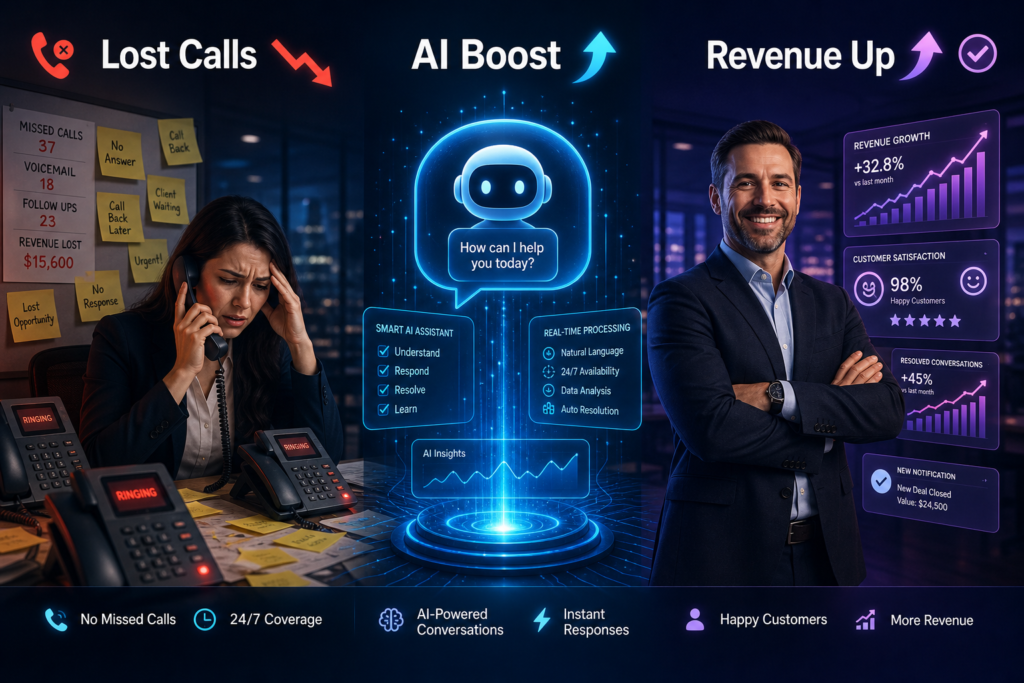
Most businesses today still struggle to engage customers proactively and efficiently, leaving valuable revenue opportunities untapped. Many rely on outdated customer support and lead generation methods that consume excessive time and resources. But what if there was a way to automate conversations that not only delight customers but also drive revenue growth and boost sales effortlessly? Conversational AI for business is emerging as that game-changing solution, enabling companies to streamline communication, generate leads, and close deals 24/7 without increasing overhead. Let’s explore how this transformative technology can fuel your business growth today.
Why This Matters
Customer expectations have evolved rapidly in the digital era. Immediate, personalized, and intelligent communication is no longer a luxury—it’s a baseline requirement. Businesses not leveraging conversational AI risk losing prospects and customers to competitors who do. Moreover, manual processes slow down growth, inflate costs, and limit your team’s productivity. Adopting AI-driven conversation tools provides a competitive advantage that directly impacts your bottom line.
The Business Problem
Manual customer support and lead nurturing methods are costly and inefficient. Agents handle repetitive queries while sales teams chase cold leads without personalized engagement. This leads to missed lead generation opportunities and suboptimal customer experiences that hurt retention. Businesses struggle to scale conversations effectively, causing bottlenecks, increased operational costs, and stagnated revenue.
How AI Solves It
Conversational AI for business uses natural language processing and machine learning to simulate human-like interactions at scale. It automates customer support, engages visitors with tailored prompts, qualifies leads, and nurtures them through the sales funnel. By handling routine tasks, AI frees human agents for complex issues and accelerates response times, enhancing satisfaction and conversion rates simultaneously.
AI Tools Required
- ChatGPT and Claude: Powerful AI for crafting personalized responses and automating conversations.
- ManyChat: Automates chat interactions and marketing funnels.
- HubSpot: Combines CRM and AI-powered lead generation for seamless sales growth.
- Zendesk: Elevates customer support with AI chatbot integration.
- Make.com and Zapier: Automate workflows to connect conversational AI with marketing and sales platforms.
Step-by-Step Guide to Implementation
- Assess your customer interaction points: Identify where automated conversations can reduce friction or enhance engagement.
- Choose the right AI tools: Select from options like ChatGPT for conversation sophistication, ManyChat for chat automation, or HubSpot for lead management.
- Integrate AI with your existing CRM and marketing systems: Use workflow automation tools like Make.com or Zapier for seamless data flow.
- Train and customize conversational scripts: Tailor AI responses to reflect your brand voice and address common customer concerns.
- Test and optimize: Monitor conversations performance, lead conversions, and customer satisfaction; iterate regularly.
Real Business Example
A mid-sized e-commerce company implemented conversational AI for business through ManyChat and integrated it with their HubSpot CRM using Make.com. This allowed them to automate product inquiries and guide prospects through tailored promotions. Within three months, their qualified lead count rose by 40%, customer support tickets dropped by 25%, and sales increased by 30%, demonstrating clear ROI.
Expected Results
- Increased revenue from higher lead conversion rates and improved customer experience.
- Reduced operational costs due to automation of routine support and sales tasks.
- Enhanced productivity of sales and support teams.
- Improved competitiveness by offering immediate and personalized engagement.
Common Mistakes to Avoid
- Deploying AI without proper integration, causing data silos.
- Using generic conversational scripts that don’t resonate with your audience.
- Neglecting continuous optimization based on user interactions and feedback.
- Failing to train staff to work alongside AI tools effectively.
Growth Opportunities
Once conversational AI foundations are in place, businesses can explore advanced techniques such as multi-agent automation with tools like CrewAI, voice-enabled customer interactions using Vapi AI, and predictive lead scoring to enhance sales strategies. Additionally, integrating AI with AI marketing automation expands personalized outreach capabilities, unlocking exponential growth.
Final Thoughts
Businesses ignoring conversational AI for business risk falling behind in today’s fast-paced market. This technology not only solves critical problems around cost, productivity, and customer engagement but also opens doors to sustained revenue growth and competitive advantage. By carefully selecting AI tools, planning implementation, and committing to continuous improvement, companies can transform conversations into powerful growth engines.