Why Most Businesses Are Missing Out on AI Marketing Automation Right Now

Some links on this page may be affiliate links. If you purchase through them, Rank Nuro may earn a commission at no extra cost to you.
Introduction
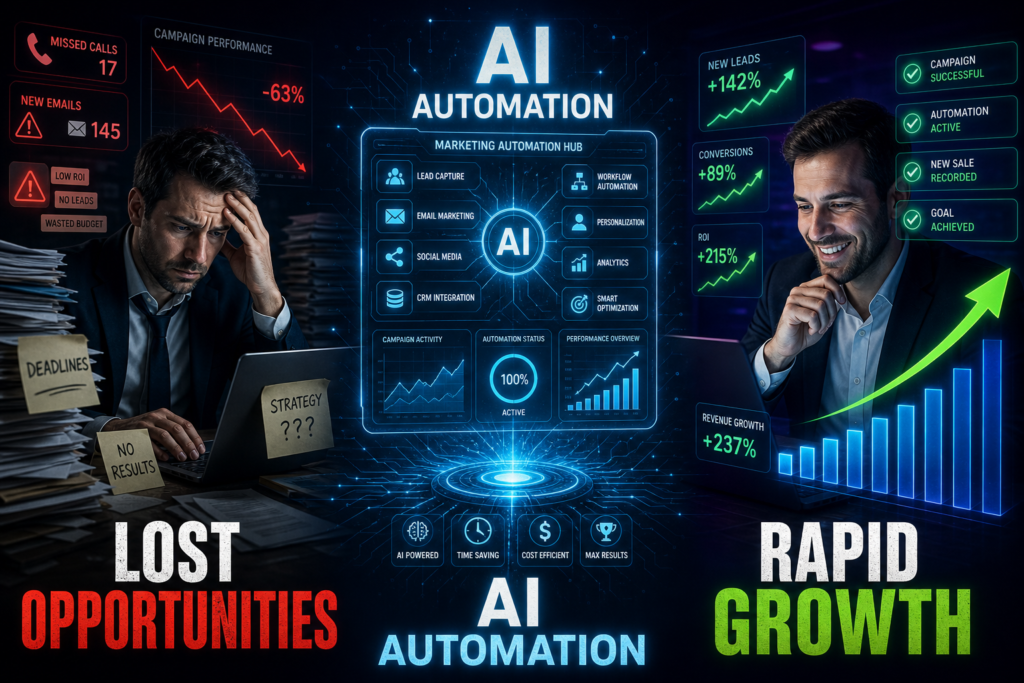
Most businesses lose countless opportunities every month because they haven’t embraced ai marketing automation. This goes beyond simple marketing tools—it’s about harnessing a powerful workflow that transforms how marketing efforts engage customers, analyze data, and convert leads. Here’s where things get interesting: companies leveraging intelligent automation are outpacing competitors in customer acquisition and retention with fewer resources. If you’re manually juggling campaigns and responses, you’re missing out on revenue and efficiency.
Why This Matters
Marketing today demands speed, personalization, and scalability. The real reason ai marketing automation works is that it saves time while increasing engagement and conversion rates. Without automation, teams drown in repetitive tasks and slow data processing, leading to lost customers and wasted budget. This small change can dramatically improve your marketing ROI and free your team to focus on strategy and creativity.
The Problem
Most businesses still rely on fragmented marketing tools, manual segmentation, and delayed responses. The biggest mistake is underestimating how much labor-intensive marketing beats down growth potential. You may be launching ad campaigns, sending emails, managing social media, and tracking leads all independently, missing coherence and speed.
Current Manual Process
- Manually creating audience segments from spreadsheets
- Setting up email campaigns individually
- Manually tracking leads and replying to inquiries
- Reporting and analyzing data in silos
Why The Manual Process Fails
This disjointed approach wastes hours and leads to human errors in targeting and follow-up. Leads slip through cracks when no system automatically qualifies or nurtures them. Delayed responses cause prospects to lose interest or turn to competitors.
AI Workflow Solution
There is a powerful workflow that integrates multiple automation tools with AI to streamline lead capture, qualification, personalized follow-up, and data-driven optimization. AI-driven workflows analyze interaction patterns and automate repetitive marketing tasks while adapting campaigns in real-time.
Tools Required
- Make.com: No-code automation platform to connect marketing apps smoothly (logo, website)
- ChatGPT: For intelligent AI responses, content creation, and customer engagement (chat gpt ai)
- Airtable: Database to store leads and customer data dynamically (crm tools)
- Slack: Team collaboration and notification platform for instant alerts (automation platforms)
Step-by-Step Guide
- Lead Capture: Use AI-powered chatbots like ai chatbot integrated via Make.com on your website to gather lead data instantly.
- Lead Qualification: Automate lead scoring in Airtable using AI-generated parameters like engagement, company size, and budget.
- Personalized Follow-Up: Trigger ChatGPT-generated customized email sequences based on lead scores through Make.com workflow automation.
- Team Alerts: Use Slack to notify sales teams immediately when high-potential leads engage or request demos.
- Reports and Optimization: Build dashboards pulling all data for continuous AI-driven campaign adjustments.
Real Business Example
A B2B SaaS company integrated ai marketing automation workflows connecting their website chatbot, Airtable CRM, and email marketing. Within three months, qualified leads grew by 45% and email engagement improved by 30%, all while their marketing team cut manual processing hours by 60%. What happened next surprised many businesses: the company doubled its sales pipeline without increasing headcount.
Expected Results
- Higher qualified lead volume
- Faster response times to prospects
- Reduced manual workload
- Improved marketing ROI
- Enhanced team collaboration
Common Mistakes
- Underestimating integration complexity: not all tools talk automatically—requires planning
- Setting up automation without clear goals or KPIs
- Over-automation leading to robotic messaging
Tips And Best Practices
- Test automated messages for natural, personalized tone
- Regularly review AI scoring criteria and update based on performance
- Start with simple workflows and scale as confidence grows
- Train your team on how automation supports their work, not replaces it
FAQ
Can small businesses benefit from AI marketing automation?
Absolutely. Even small teams save time and increase marketing efficiency with the right workflows tailored to their scale.
Are AI tools expensive?
Many tools offer scalable pricing including free tiers, making AI automation accessible for most budgets.
Is programming needed?
No. Platforms like Make.com offer no-code automation to build workflows easily.
Final Thoughts
Most businesses are missing out on the hidden advantage of ai marketing automation today. The competitive advantage lies in embracing AI workflows that automate lead management, personalize marketing, and empower teams to focus on growth and innovation. This is where automation becomes powerful—a small change to your marketing system that creates a transformational impact on revenue and efficiency.