How AI Marketing Automation Is Transforming Business Growth in 2026

Some links on this page may be affiliate links. If you purchase through them, Rank Nuro may earn a commission at no extra cost to you.
Introduction
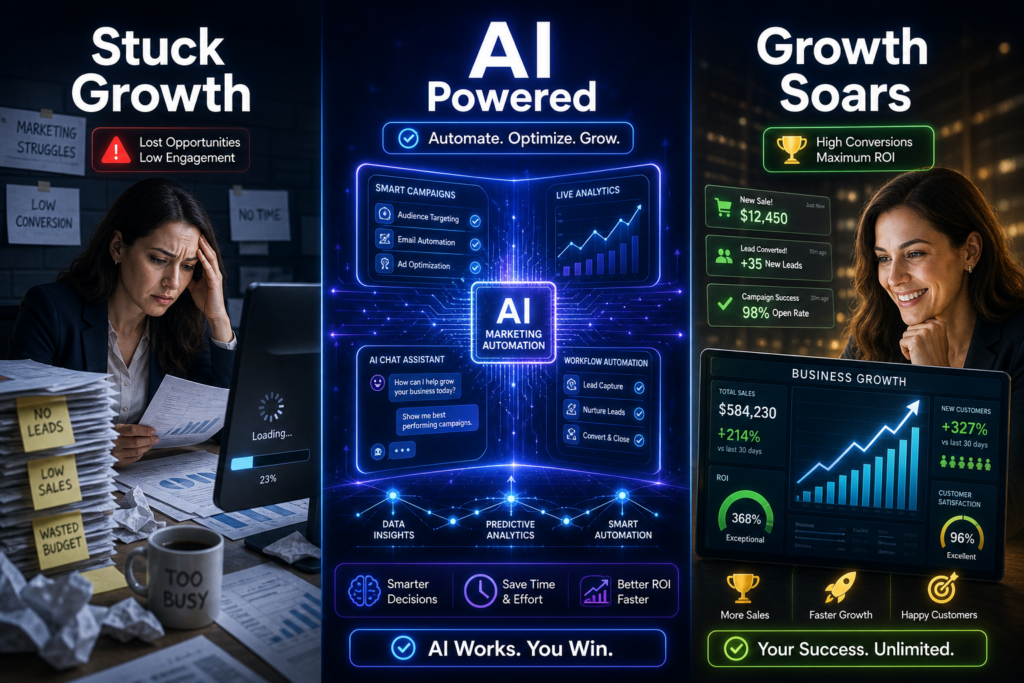
Most businesses struggle with managing vast marketing data, segmenting audiences, and personalizing campaigns effectively. The real reason ai marketing automation works is that it drastically reduces these time-consuming manual tasks, allowing businesses to accelerate growth in 2026 and beyond. Here’s where things get interesting: companies deploying AI-driven marketing automation systems are not only streamlining processes—they are unlocking unprecedented revenue opportunities and customer engagement levels.
Why This Matters
Marketing today demands precision targeting and quick adaptation to consumer behavior, yet many businesses still rely on inefficient manual workflows. This lag often leads to missed opportunities, poor lead qualification, and subpar customer experience. Using ai marketing automation offers a competitive advantage by handling large-scale data analysis, campaign management, and lead nurturing seamlessly.
The Problem
Most marketing departments spend countless hours on repetitive tasks such as data entry, customer segmentation, and manual email campaigns. The biggest mistake is not automating these processes early enough—resulting in wasted resources and slower response times to market changes.
Current Manual Process
Typically, marketers export lists, segment leads manually in spreadsheets, customize emails piece by piece, and track results across multiple platforms. This process is error-prone, slow, and demands constant human intervention.
Why The Manual Process Fails
Manual marketing processes fail because they cannot scale with growing customer databases or adapt quickly to real-time behavior data. This gap creates delays in lead follow-up and inconsistent messaging that can drive prospects away.
AI Workflow Solution
The hidden advantage is implementing an ai marketing automation workflow that integrates AI-based segmentation, predictive analytics, and automated multichannel campaigns. This system continuously qualifies leads, personalizes outreach, and optimizes budget allocation dynamically.
Tools Required
- Make.com: Integrates various marketing platforms without coding, enabling seamless automation.
- ChatGPT: Powers conversational AI assistants for customer interaction and content creation.
- Airtable: Acts as a flexible database for lead and campaign management.
- Slack: Facilitates real-time team communication and workflow notifications.
- Zapier: Automates workflows between apps with extensive integration capabilities.
Step-by-Step Guide
- Connect lead capture forms (e.g., Typeform) to Make.com or Zapier.
- Automatically send captured data to Airtable for lead organization.
- Leverage ChatGPT to analyze lead intent and score leads based on engagement.
- Trigger personalized email or message campaigns through integrated marketing platforms.
- Notify sales and marketing teams via Slack for immediate follow-up on hot leads.
- Monitor and optimize the entire pipeline automatically by adjusting workflows in Make.com or Zapier.
Real Business Example
A mid-sized e-commerce company implemented this ai marketing automation workflow, integrating ChatGPT with Make.com and Airtable. They automated lead qualification and email drip campaigns, leading to a 35% increase in conversion rates and a 40% reduction in manual labor hours within 6 months.
Expected Results
- Increased lead conversion through timely, personalized outreach.
- Enhanced marketing team productivity by automating mundane tasks.
- Greater scalability with AI dynamically adjusting campaigns.
- Improved cross-team communication and faster response times.
Common Mistakes
- Overcomplicating workflows with too many tools, causing confusion.
- Ignoring data privacy compliance when automating customer data.
- Failing to continuously monitor and optimize AI-driven campaigns.
- Undertraining teams on new AI automation tools and workflows.
Tips And Best Practices
- Start small with core marketing automation and expand gradually.
- Regularly review AI predictions against actual campaign outcomes.
- Train teams to interpret AI insights and intervene when necessary.
- Use integrated communication tools like Slack to close feedback loops fast.
FAQ
What is ai marketing automation?
It is the use of artificial intelligence to automate marketing activities such as lead generation, segmentation, campaign management, and customer engagement to improve efficiency and growth.
Which tools are best for ai marketing automation?
Popular tools include Make.com, ChatGPT, Airtable, Zapier, and Slack.
How quickly can businesses expect results?
Many see improvements within 3-6 months by automating key repetitive tasks and optimizing lead nurturing.
Final Thoughts
Implementing an ai marketing automation workflow is no longer optional but essential for businesses aiming to scale efficiently in 2026. This small change can dramatically improve results by reducing manual workload, optimizing marketing spend, and increasing conversions. Most guides never mention how critical the integration of AI with automation platforms is for unlocking the full potential of marketing teams. Start building your AI-driven marketing automation system today and gain a transformative edge in business growth.