Why Most Businesses Are Missing Out on AI Marketing Automation Right Now

Some links on this page may be affiliate links. If you purchase through them, Rank Nuro may earn a commission at no extra cost to you.
Introduction
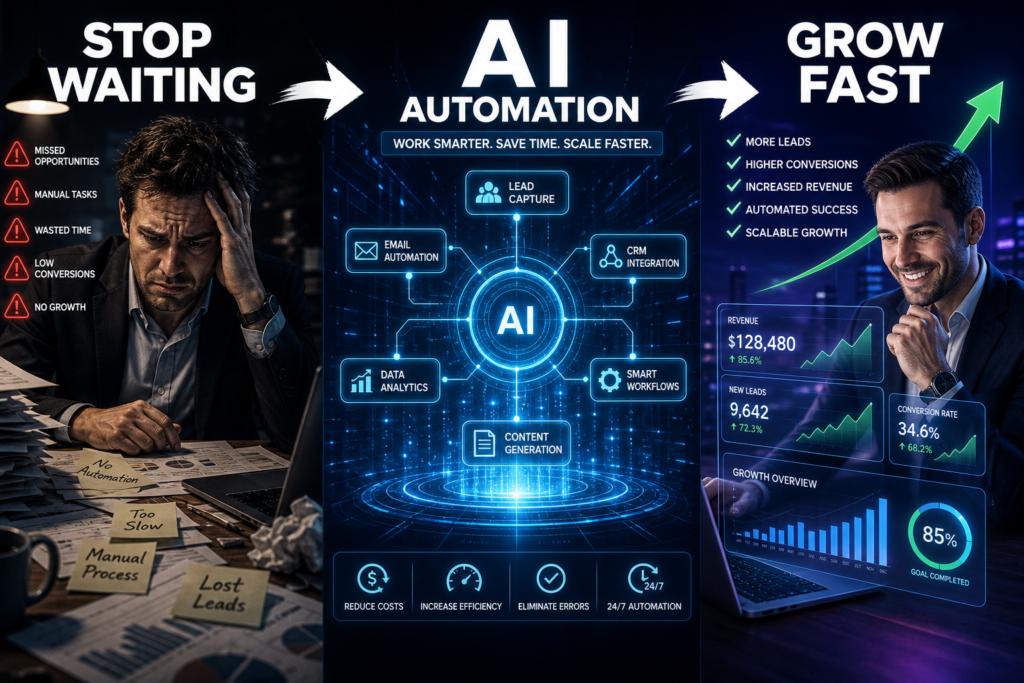
Most businesses lose critical marketing opportunities every day because they haven’t fully embraced ai marketing automation. This small oversight is causing a ripple effect of inefficiencies, missed leads, and escalating costs. What happened next surprised many companies: those who adopted sophisticated AI-driven marketing workflows experienced not only cost savings but also unprecedented growth. This article uncovers why most businesses are missing out on the competitive advantage AI marketing automation offers and how you can implement it effectively.
Why This Matters
Marketing is evolving at lightning speed with the integration of AI tools. The real reason this works is because AI marketing automation transforms generic campaigns into personalized, real-time customer experiences without added manual effort. The hidden advantage is improved lead qualification, faster response times, and better customer engagement, all translating to increased ROI.
The Problem
Many businesses still rely on manual marketing processes—email blasts without segmentation, inconsistent social media posting, and delayed customer follow-ups. This results in wasted resources and poor conversion rates. The biggest mistake is underestimating the complexity and volume of data involved in modern marketing, making manual efforts inefficient and error-prone.
Current Manual Process
Most marketing teams manually draft campaigns, segment lists in spreadsheets, and track engagement in disconnected tools. They spend hours juggling multiple platforms, extracting reports, and following up with leads without automation. Most guides never mention this, but this fragmented approach stifles scalability and slows down the entire marketing funnel.
Why The Manual Process Fails
Manual marketing fails because it cannot keep pace with customer behavior shifts or deliver timely, personalized messages. Delay in lead responses causes loss of high-intent prospects. Moreover, manual data handling increases errors and inconsistencies, reducing customer trust and engagement.
AI Workflow Solution
This is where ai marketing automation becomes powerful. By integrating AI tools into your marketing workflows, you automate lead qualification, customer segmentation, content personalization, and campaign execution. The automation layer handles repetitive tasks while AI analyzes patterns to optimize performance, ensuring your marketing machine runs efficiently with minimal manual input.
Tools Required
- Make.com: A no-code automation platform to connect your marketing apps and automate workflows seamlessly.
 Visit Make.com
 - ChatGPT: Powerful AI content generator to personalize emails, social posts, and ad copy instantly.
 Visit ChatGPT
 - Activepieces: Open source automation tool to create flexible AI workflows customized for your marketing needs.
 Visit Activepieces
Step-by-Step Guide to Building an AI Marketing Automation Workflow
- Identify key marketing tasks to automate such as lead capture, qualification, email marketing, and social media posting.
- Use Make.com to connect your CRM, email marketing service, and social platforms.
- Integrate ChatGPT through API or workflow steps to generate personalized marketing content automatically.
- Set triggers for lead actions like form submissions or website visits to initiate automated workflows.
- Leverage Activepieces for custom conditions and AI-powered decision making within your automation flows.
- Test and optimize the workflows by analyzing engagement metrics and conversion rates.
Real Business Example
A mid-sized e-commerce company automated their email and retargeting campaigns using Make.com and ChatGPT. They set up workflows to segment leads by behavior and send AI-generated personalized emails. Within 3 months, they increased lead conversion by 35% and reduced manual marketing labor by 50%.
Expected Results
- Reduced manual workload allowing marketing teams to focus on strategy.
- Higher lead conversion through personalized, timely communication.
- Improved campaign ROI by targeting prospects more effectively.
- Greater data-driven insights from AI analysis to continuously improve tactics.
Common Mistakes
- Ignoring the importance of clean, centralized data for AI workflows.
- Trying to automate without clear goals leading to complex and ineffective systems.
- Over-relying on AI without human oversight causing impersonal messaging.
Tips And Best Practices
- Start small with automating one marketing process and scale gradually.
- Continuously monitor workflow performance and tweak AI parameters.
- Combine ai tools like chatbots and content generators for richer automation.
FAQ
What is AI marketing automation?
It is the use of AI-powered tools and workflows to automate marketing processes such as lead qualification, campaign execution, and customer engagement.
Can AI replace marketers?
No, AI enhances marketers’ capabilities by handling repetitive tasks and providing insights to make campaigns more effective.
How quickly can I implement AI marketing automation?
With no-code tools like Make.com, you can have basic workflows up and running within days.
Final Thoughts
This small change of incorporating ai marketing automation can dramatically improve marketing results. Most businesses are still missing out by clinging to manual methods. With the right tools like Make.com, ChatGPT, and Activepieces combined in a smart workflow, businesses can unlock growth opportunities that were previously unreachable.