How AI Chatbot Technology Is Transforming Customer Service Today
Discover how ai chatbot technology is transforming customer service today by improving responsiveness, personalization, and efficiency for businesses worldwide.
Introduction
In the evolving landscape of customer service, ai chatbot technology is revolutionizing how businesses interact with their customers. These intelligent systems are reshaping communication, improving efficiency, and creating personalized experiences that were previously unimaginable. This article explores the transformative impact of AI chatbots, highlighting their benefits, use cases, and what the future holds.
Understanding AI Chatbots
At its core, an ai chatbot is a software application that uses artificial intelligence chat to simulate human conversation through text or voice interfaces. Leveraging machine learning and natural language processing, these chatbots can understand user queries, provide instant responses, and even anticipate customer needs for a seamless experience.
Types of AI Chatbots
- Rule-Based Chatbots: Operate on predefined rules and keywords.
- Conversational AI: Use advanced AI to understand context and handle complex interactions.
- AI Chatbot GPT: Powered by models like OpenAI’s GPT, these offer human-like conversation ability.
How AI Chatbots Are Transforming Customer Service
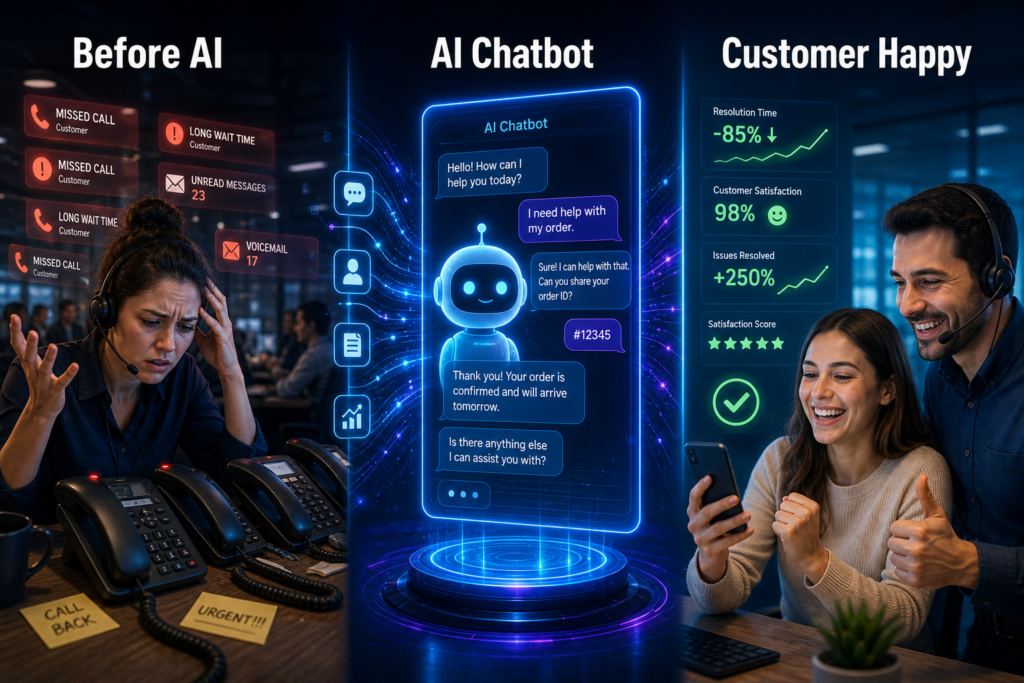
AI chatbot technology is transforming customer service across industries by enhancing responsiveness, efficiency, and personalization.
1. Improved Availability and Response Time
Traditional customer service often means waiting in line to speak to a human agent. With chatbot ai, support is available 24/7, reducing wait times and providing instant answers to common questions.
2. Cost Reduction and Scalability
Hiring and training customer service agents can be costly. AI chatbots handle thousands of queries simultaneously, enabling businesses to scale support without proportional costs.
3. Personalized Customer Interaction
By using data analytics and learning algorithms, ai assistants provide tailored recommendations and solutions, fostering better customer satisfaction.
4. Multilingual Support
Modern chatbots can communicate in multiple languages. This breaks down barriers for global companies, ensuring customers worldwide receive consistent support.
Use Cases of AI Chatbots in Customer Service
The applications of AI chatbots are diverse and expanding.
- Automated FAQ Handling: Quickly addressing common queries like order status, product information, or return policies.
- Appointment Scheduling: Streamlining bookings and reminders without human intervention.
- Technical Support: Guiding users through troubleshooting processes and escalating complex issues.
- Lead Generation and Sales: Engaging visitors on websites, qualifying leads, and even processing orders.
Integration With Other AI Technologies
AI chatbots often operate alongside other ai tools such as ai video generators for visual assistance, or text to speech ai to offer voice-based help. This convergence makes customer service more dynamic and user-friendly.
Benefits of AI Chatbots for Businesses and Customers
| Benefits for Businesses | Benefits for Customers |
|---|---|
| Cost efficiency and reduced operational expenses. | Instant support any time of day. |
| Enhanced scalability and handling peak times efficiently. | Consistent and accurate information delivery. |
| Data collection and insights for improving services. | Personalized and engaging experiences. |
| Multilingual and wide-reaching support capabilities. | Easy access to support via multiple channels. |
Best Practices for Implementing AI Chatbots
- Define Clear Objectives: Identify what customer problems the chatbot should solve.
- Focus on User Experience: Design conversations that flow naturally and are easy to follow.
- Integrate Seamlessly: Ensure chatbot works well with existing customer support workflows.
- Regularly Update and Train: Keep chatbot knowledge base up-to-date and learn from interactions.
- Provide Human Escalation: Let customers easily connect with human agents when needed.
Frequently Asked Questions (FAQ)
What is the difference between AI chatbots and traditional chatbots?
AI chatbots use artificial intelligence and machine learning to understand and respond more naturally, while traditional chatbots operate on set rules and scripts.
Can AI chatbots handle complex customer queries?
Advanced conversational ai chatbots can understand context and manage complex interactions, but very intricate cases may still require human agents.
Are AI chatbots expensive to implement?
Costs vary depending on complexity, but many solutions are scalable and cost-effective compared to expanding human teams.
How do AI chatbots improve customer satisfaction?
They provide fast, personalized, and consistent responses, improving the overall customer experience.
Can AI chatbots support multiple languages?
Yes, many AI chatbots are designed to operate in several languages, making them suitable for global customer bases.
Conclusion
The integration of ai chatbot technology into customer service is a game-changer. Businesses that leverage these AI-driven tools are not only able to offer faster, more efficient, and personalized customer interactions but also achieve significant operational benefits. As AI continues to advance, the future of customer service is set to become even more responsive, intuitive, and engaging, with ai chatbots online leading the way.