How AI Marketing Automation Is Transforming Business Growth in 2026

Some links on this page may be affiliate links. If you purchase through them, Rank Nuro may earn a commission at no extra cost to you.
Introduction
Most businesses are losing valuable time and revenue because their marketing efforts still rely heavily on manual processes, leading to missed opportunities and inefficient customer engagement. The real reason this works is that ai marketing automation is evolving rapidly in 2026, offering unprecedented ways to supercharge growth by automating campaigns, targeting the right audience, and personalizing messages at scale. This article uncovers how you can harness this transformation to gain a competitive advantage and scale your business efficiently.
Why This Matters
Businesses that fail to leverage ai marketing automation risk falling behind their competitors who use AI-powered systems to reduce manual marketing workloads, optimize budgets, and improve customer conversion rates. The hidden advantage is the ability for automation to learn and adapt in real time, driving smarter decisions and better campaign results.
The Problem
Most marketing teams spend countless hours on repetitive tasks such as data segmentation, email scheduling, and performance monitoring. This not only delays campaign execution but also results in suboptimal targeting and lost sales opportunities. The biggest mistake is relying solely on traditional tools that don’t integrate AI capabilities, thus limiting the effectiveness of campaigns.
Current Manual Process
Typically, marketers manually segment email lists, create content, send campaigns via separate tools, and then analyze results in spreadsheets. Coordinating these steps is error-prone and slow, often missing the chance for timely adjustments based on customer behavior.
Why The Manual Process Fails
This manual workflow is inefficient because it cannot react dynamically to customer interactions, resulting in generic messaging that lowers engagement and conversion. Marketing teams get bogged down in operational details rather than strategy, causing growth to plateau.
AI Workflow Solution
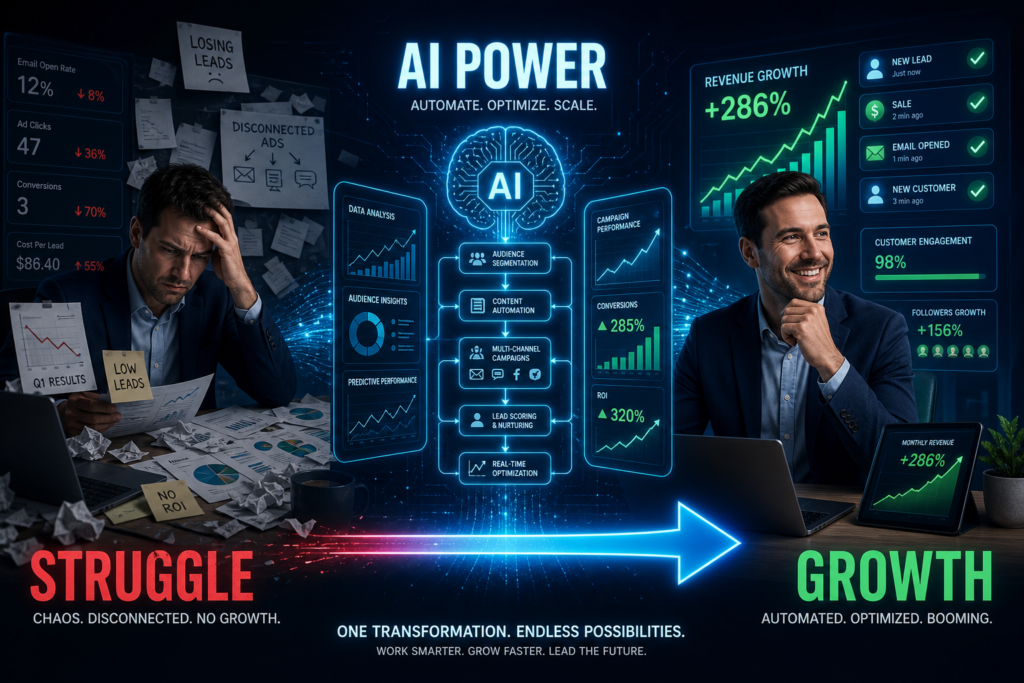
Here’s where things get interesting: an ai marketing automation system can automate customer segmentation, personalize messages with AI content generators, schedule campaigns dynamically, and analyze performance through AI analytics. This small change can dramatically improve results and free your team to focus on creative and strategic initiatives.
Tools Required
- ChatGPT: For AI-driven content creation and chat assistance.
- Make.com: The no-code automation platform that connects your apps and automates workflows.
- ManyChat: Chat automation tool to engage customers on messaging platforms.
- Zapier: To integrate multiple marketing tools and automate tasks seamlessly.
Step-by-Step Guide
- Set Up Customer Segmentation: Use Make.com to pull customer data from your CRM and segment based on behavior or demographics automatically.
- Generate Personalized Content: Use ChatGPT to create dynamic email and social media content tailored to each segment.
- Automate Campaign Scheduling: Connect scheduling tools and social platforms through Zapier to automatically launch campaigns at optimal times.
- Engage with AI Chatbots: Deploy ManyChat for real-time automated customer interactions and lead qualification.
- Analyze & Optimize: Use AI analytics from Make.com to monitor campaign performance and adjust parameters without manual intervention.
Real Business Example
A mid-sized ecommerce company implemented this workflow and saw a 35% increase in email open rates and a 22% lift in conversions within three months. Their marketing team saved over 20 hours per week, redirecting focus to strategic growth efforts.
Expected Results
By deploying an AI marketing automation workflow, expect to see improved customer engagement, faster campaign rollout, better lead nurturing, and ultimately accelerated business growth. The relief of manual workload causes enhanced team satisfaction and resource optimization.
Common Mistakes
- Not integrating tools properly leading to data silos.
- Ignoring the continuous optimization AI allows through real-time feedback.
- Over-automation without human oversight causing message tone issues.
Tips And Best Practices
- Start small and scale automation workflows gradually.
- Continuously train your AI models with updated customer data.
- Maintain a balance between automation and personalized human touch.
FAQ
What is AI marketing automation?
It is the use of AI-powered tools to automate repetitive marketing tasks such as content creation, campaign management, lead segmentation, and customer interactions to drive scalable growth.
Which AI tools are best for marketing automation?
Integrated platforms like Make.com, ChatGPT for content, and chatbot tools like ManyChat are essential components.
How do I get started with AI marketing automation?
Identify repetitive marketing tasks, choose the right tools that integrate well, and build automated workflows step-by-step focusing on measurable business outcomes.
Final Thoughts
Very few businesses are doing this correctly, but those who embrace ai marketing automation today will unlock a transformative growth trajectory in 2026 and beyond. The hidden advantage is the continuous learning and optimization AI brings, turning marketing from a cost center into a powerhouse of business expansion.