How AI Marketing Automation Is Transforming Business Growth in 2026

Some links on this page may be affiliate links. If you purchase through them, Rank Nuro may earn a commission at no extra cost to you.
Introduction
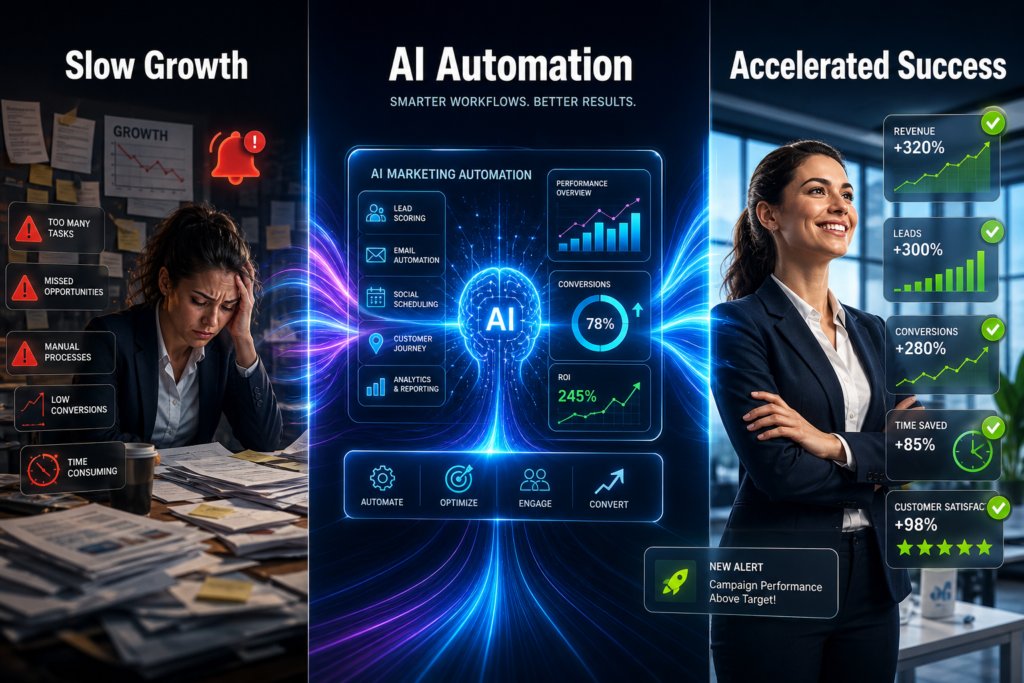
Most businesses still struggle with inefficient marketing processes that drain time and resources without delivering proportional growth. However, ai marketing automation is rapidly changing this story in 2026. By intelligently automating key marketing tasks, companies gain a competitive advantage, boost lead conversion, and accelerate growth with fewer manual efforts. Here’s where things get interesting: this small change can dramatically improve your marketing ROI and enable scalability like never before. In this article, we’ll walk through the practical ways AI marketing automation solves real business problems and how you can implement an effective workflow today.
Why This Matters
Marketing is the engine driving business growth, yet many organizations lose hours daily on repetitive tasks such as campaign management, customer segmentation, and content personalization. The hidden advantage of using AI automation is that it not only saves time but also delivers insights that human teams often overlook, increasing marketing effectiveness and customer engagement.
The Problem
Manual marketing processes suffer from inefficiencies that limit growth:
- Time-consuming segmentation and targeting
- Lack of personalization at scale
- Slow response to customer behavior
- Difficulty integrating data from multiple platforms
Most guides never mention this, but the biggest mistake is relying too heavily on manual data management and campaign execution, which introduces delays and errors that kill momentum.
Current Manual Process
Typically, marketing teams manually export data from CRMs, build lists, draft emails, and monitor campaign performance in isolation. This patchwork approach leads to slow adaptation and missed opportunities to retarget or upsell. What happened next surprised many businesses: they found themselves overwhelmed during peak campaign periods, unable to scale rapidly.
AI Workflow Solution
The real reason ai marketing automation works is that it seamlessly connects data analysis, content generation, and campaign execution in a unified workflow that adapts in real-time to customer interactions. By implementing intelligent workflows, marketers can automate lead qualification, personalized content delivery, and multi-channel engagement with minimal human intervention.
Tools Required
Creating an effective AI marketing automation workflow requires tools that handle data integration, AI-driven content, and multi-platform automation:
- Make.com – No-Code Automation Platform for connecting apps and building workflows (
 Make.com )
 - ChatGPT – AI content generation for personalized marketing copy and customer interactions ( ChatGPT AI tools )
- HubSpot CRM – Customer data management and segmentation ( CRM )
- Slack – Real-time team collaboration and alerts ( Automation communication )
Step-by-Step Guide
- Integrate Customer Data: Use Make.com to connect HubSpot CRM with your marketing channels and consolidate customer data for segmentation.
- Automate Lead Qualification: Build an AI model using ChatGPT to score leads based on behavior and engagement metrics.
- Personalize Messaging: Generate dynamic email and ad copy through ChatGPT tailored to each segment.
- Launch Campaigns: Automatically deploy personalized campaigns across email, social media, and ads with Make.com workflows.
- Monitor and Alert: Set up Slack notifications for key milestones and performance thresholds to enable quick response.
Real Business Example
A tech startup implemented this AI marketing automation workflow to streamline their campaign management. By automating lead scoring and personalized content creation, they increased qualified leads by 40% and reduced campaign turnaround time by 60%. What sets this apart is their ability to quickly pivot messaging in response to engagement data, driving higher conversion rates.
Expected Results
- Improved lead qualification and nurturing
- Enhanced customer engagement through personalization
- Faster campaign deployment and adaptability
- Reduced manual effort allowing focus on strategy
Common Mistakes
Many businesses try to automate without clear goals, resulting in broken workflows or irrelevant messaging. Another mistake is neglecting continuous testing and optimization after deployment. Remember, the biggest mistake is thinking AI marketing automation is ‘set and forget’ — it requires ongoing tuning for the best results.
Tips And Best Practices
- Start small with a focused workflow, then scale complexity gradually.
- Use AI tools like ChatGPT not just for content but also for customer insights.
- Regularly audit your CRM data quality to maintain effective segmentation.
- Encourage cross-team collaboration via tools like Slack to leverage automation insights.
FAQ
What is AI marketing automation?
It is the use of artificial intelligence technologies combined with automation platforms to streamline marketing processes and enhance personalization and efficiency.
Which tools are best for AI marketing automation?
Platforms like Make.com for workflow automation, ChatGPT for AI content generation, and HubSpot for CRM integration are top choices.
How quickly can I see results?
Businesses often notice increased efficiency and lead engagement within weeks of implementing AI marketing automation workflows.
Final Thoughts
Very few businesses are doing AI marketing automation correctly, yet those who do gain a significant growth edge in 2026. By automating key marketing workflows with smart tools like Make.com and AI-powered assistants such as ChatGPT, companies dramatically improve their ability to engage customers, convert leads, and scale efficiently. If you want to stay competitive and leverage the hidden advantages of automation, it’s time to build your AI marketing automation system today.