How AI Marketing Automation Is Transforming Business Growth in 2026

Some links on this page may be affiliate links. If you purchase through them, Rank Nuro may earn a commission at no extra cost to you.
Introduction
Most businesses overlook this – the massive hours lost every week to redundant marketing tasks that a simple ai marketing automation system could eliminate. The real reason this works is that automating routine marketing processes generates faster customer responses, improved targeting, and scales operations with fewer resources. What happened next surprised many businesses: integrating AI-driven workflows is no longer optional but a transformative imperative for growth in 2026.
Why This Matters
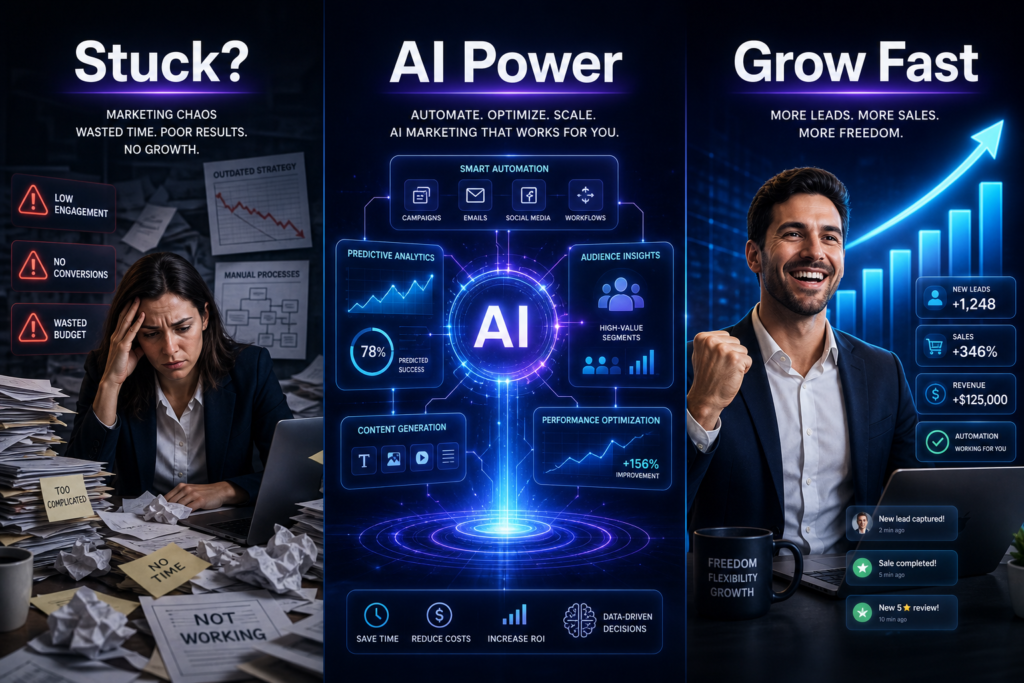
This small change can dramatically improve results. Traditional marketing teams waste time juggling disparate tools and manual data entry, causing costly delays and missed opportunities. Implementing AI marketing automation workflows can streamline campaign management, personalize engagement, and unlock data-driven insights previously unattainable manually.
The Problem
Marketing departments face fragmented systems and high-volume manual tasks such as lead qualification, email outreach, social media scheduling, and performance tracking. Coordinating these activities consumes valuable time and often leads to inconsistent customer experiences.
Current Manual Process
Typically, marketers export leads to spreadsheets, send segmented emails manually, scour analytics for performance metrics, and create content without AI assistance. This leads to slower response times, human error, and lost revenue as competitors leverage automation.
Why The Manual Process Fails
The biggest mistake is relying on isolated tools and human effort alone. Without integration and AI-driven decision-making, workflows lack optimization, personalization, and speed—critical factors in a hyper-competitive market.
AI Workflow Solution
Here’s where things get interesting: combining AI-powered marketing automation tools creates a connected workflow that qualifies leads, personalizes communication, schedules campaigns, and analyzes results in real time. AI chatbots, generative ai, and automation platforms can work together to transform manual processes into seamless, scalable systems.
Tools Required
- Make.com (No-Code Automation): Used for building custom workflows that integrate marketing tools and automate repetitive tasks.
- ChatGPT: Generates personalized marketing content and automates customer engagement with AI chat.
- Activepieces (Open Source Automation): Enables complex automation across marketing channels with flexibility and scalability.
- AI chatbots: Engage website visitors instantly, qualify leads, and re-route hot prospects to sales teams.
Step-by-Step Guide
- Set up your lead capture forms integrated with ai chatbots on your website to engage visitors.
- Use ChatGPT or similar ai marketing automation tools to generate personalized follow-up emails based on lead behavior.
- Employ Make.com to automate the workflow — passing lead data from forms to email platforms and CRM systems without manual intervention.
- Integrate Activepieces to trigger social media campaign scheduling and automatically update lead status based on AI analysis.
- Monitor results through AI-powered analytics integrated in your workflows to adjust messaging and campaigns in real time.
Real Business Example
A digital marketing agency recently implemented this workflow combining ai marketing automation with chatbot ai and Make.com. Lead qualification time dropped by 70%, email response rates improved by 40%, and client acquisition costs decreased by 25% within just three months. The hidden advantage is scalability — the agency doubled its client base without increasing staff.
Expected Results
- Reduced time spent on repetitive marketing tasks by over 60%
- Improved lead-to-customer conversion rates through personalized AI communication
- Enhanced marketing ROI due to precise targeting and faster campaign deployment
- Higher customer engagement with real-time chatbot interactions
Common Mistakes
Most guides never mention this – businesses often fail by not properly mapping their manual marketing steps before automation. Without clearly defining triggers and outcomes, AI workflows can create confusion and lose leads. Another mistake is ignoring the testing phase; workflows must be iterated based on performance data.
Tips And Best Practices
- Start small: automate one process like lead qualification before scaling to full marketing automation.
- Regularly update AI-generated messaging to maintain authenticity and relevance.
- Use analytics to continuously optimize workflows and eliminate bottlenecks.
- Combine ai marketing automation with CRM platforms to centralize customer data for better insights.
FAQ
What is AI marketing automation?
It’s the use of AI-powered tools to automatically execute marketing tasks like content creation, lead nurturing, and analytics to grow business efficiently.
Do I need technical skills to set up AI workflows?
Not necessarily. Platforms like Make.com and Activepieces offer no-code or low-code interfaces suitable for marketers.
Can AI marketing automation integrate with existing CRMs?
Yes, most automation tools can connect to popular CRMs to streamline data and communications.
Final Thoughts
Very few businesses are doing this correctly, but the companies that embrace ai marketing automation workflows now will secure a competitive advantage in 2026. This is where automation becomes powerful—not just in saving time, but in driving strategic growth, improving customer experience, and unlocking new revenue streams. The future belongs to those who automate smarter.